If you still think search optimization is just about stuffing keywords and grabbing one of ten blue links, your traffic data is already telling you the bad news. People don't scroll through pages anymore. They type a complex question into ChatGPT, Perplexity, or Google AI Overviews, and they read a single, synthesized answer. If your brand isn't inside that answer, you basically don't exist to that user.
Let's break down how we fix that by shifting our focus from traditional search engine optimization to Answer Engine Optimization (AEO).
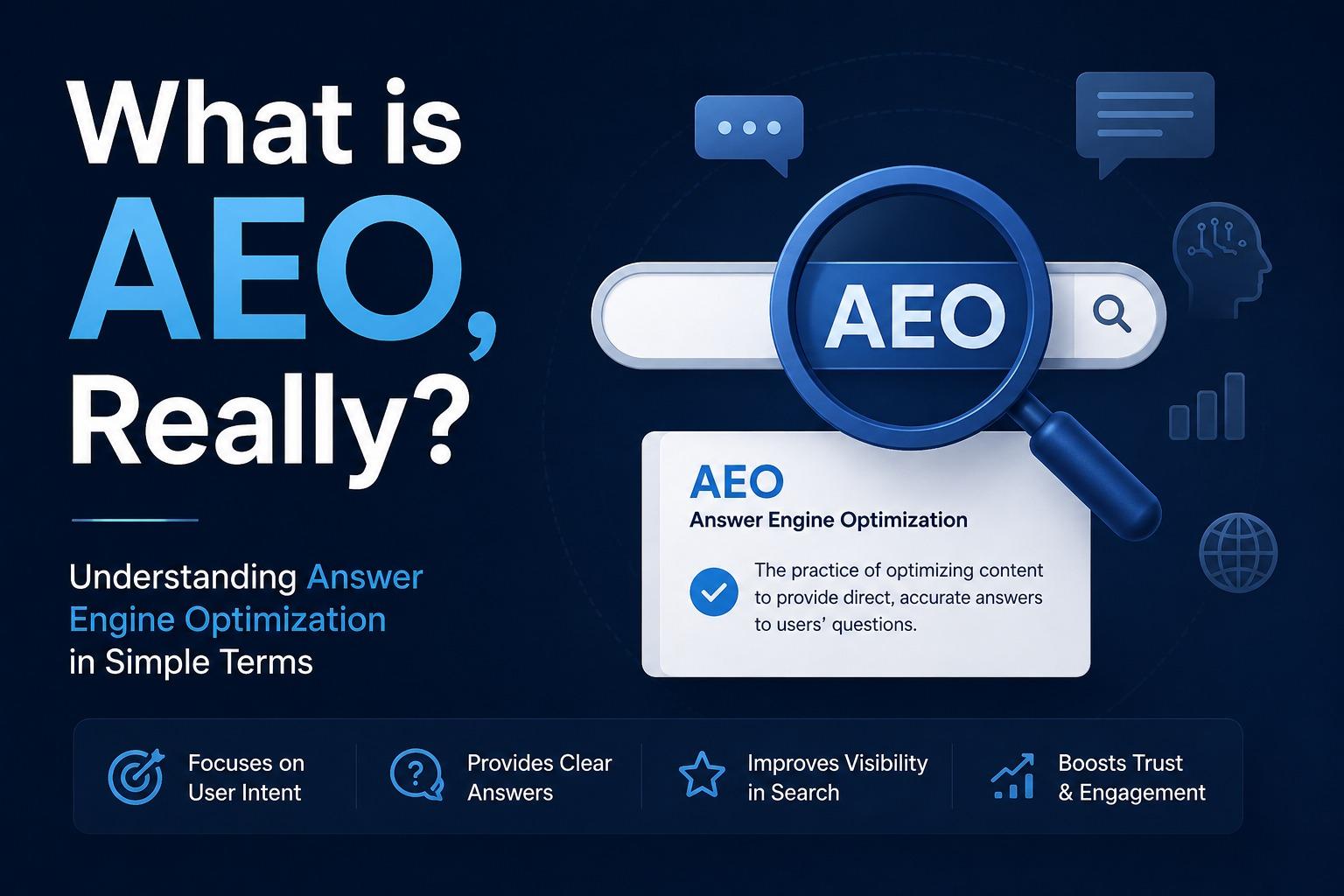
1. What is AEO, Really?
Think of traditional SEO as getting your book onto a crowded library shelf. You care about the spine label, the shelf placement, and the foot traffic walking past.
AEO is different.AEO is about being the exact paragraph that a researcher reads out loud when someone asks a complex question. When an AI engine builds a response, it doesn't just pass out URLs. It reads hundreds of web pages in milliseconds, extracts facts, and writes a brand-new summary. AEO is the practice of engineering your web pages so that AI tools extract your data, use your insights, and cite your brand name as the ultimate source of truth.
Why You Can't Ignore It
- The Zero-Click Reality: Over 70% of searches now finish without anyone clicking a website link. They get what they need right on the screen.
- The Trust Factor: When Perplexity or ChatGPT names your business as the source for a statistic or a guide, users immediately view you as an industry leader.
- Traffic Quality: The people who do click through from an AI citation have much higher intent and convert way faster than random organic searchers.
2. AEO vs. SEO: The Quick Breakdown
People love to scream “SEO is dead!” every time a new tech trend drops. Don't fall for it.
SEO is the engine block; AEO is the high-performance fuel management system. You still need clean code, fast loading speeds, and solid site architecture (SEO), but you need a totally different content layout for machines to read and quote (AEO).
| Metric | Old-School SEO | Modern AEO |
|---|---|---|
| Main Target | Rank #1 to #10 on a search results page. | Get cited directly inside the AI answer box. |
| Success Score | Organic clicks and click-through rate (CTR). | Citation frequency and AI visibility share. |
| Writing Style | Long-form keyword-stuffed paragraphs. | Entity-driven text, clean tables, and direct answers. |
| Trust Signals | Backlinks and domain age. | Schema markup, data ownership, and brand consistency. |
3. The Blueprint: How to Do AEO Right
If you want AI bots to pick your content over your competitors, you have to write and structure for machines and humans. Here is the exact playbook we use.
A. Write for “Entities,” Not Just Keywords
AI models don't care about random keyword variations. They look at entities—recognized people, tools, places, and concepts.
- Stop building pages around disconnected keywords. Build deep content hubs around specific industry concepts.
- Make sure your brand name, core products, and leadership team are mentioned consistently across the web so knowledge graphs recognize your entity as a legitimate authority.
B. Use the “Direct Answer” Layout
AI web crawlers are lazy in the best way possible—they want the answer right away without digging through five paragraphs of introduction.
- Under every major heading (H2), drop a short, 40-to-60-word definition or summary box.
- Keep the tone completely neutral and factual.
- If an AI crawler can lift that exact block of text and completely answer a user's question, you've won the snippet.
C. Stack Your Schema Markup (JSON-LD)
Code is the language you use to speak directly to the AI's backend database. If you don't use schema, you are making the AI guess what your page is about.
- Don't just slap a basic article tag on your page. Combine
TechArticleorArticleschema withFAQPage,HowTo, andOrganizationJSON-LD blocks. - Give proper author credit using
Personschema—AI models trust real experts way more than generic corporate bylines.
D. Own Your Data
AI models hate hallucinations, so they actively hunt for pages packed with hard facts and reject fluff.
- Cut out the filler words and marketing hype. Back your claims up with original data, proprietary surveys, or real benchmarks pulled straight from your business.
- When your site is the origin of a data point, every AI engine on earth has to cite you to reference it.
4. Winning Featured Snippets and AI Overviews
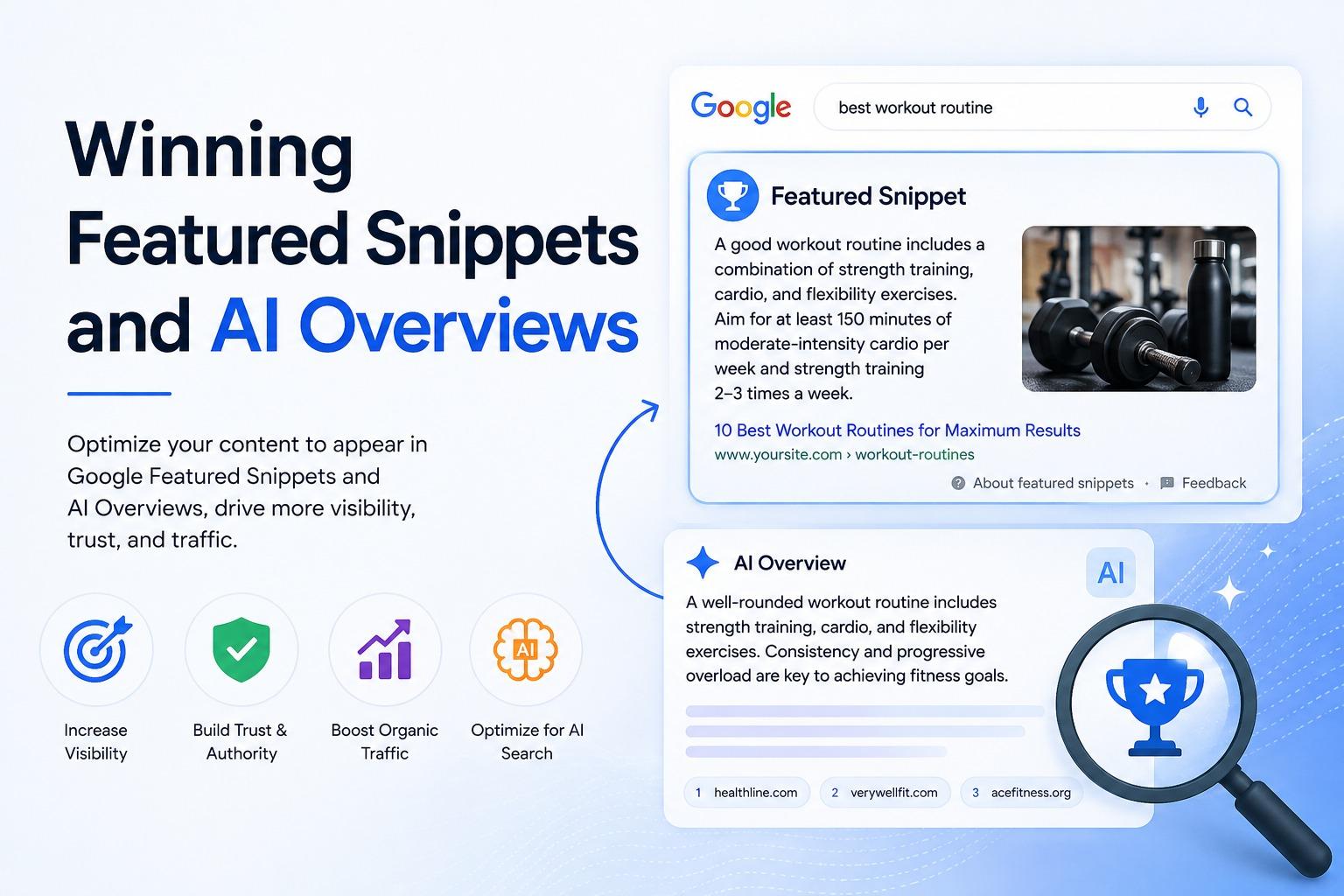
Featured Snippets are the training wheels for AI citations. If you can win a traditional Google snippet, you are halfway to winning an AI Overview citation.
- For Paragraphs: Put a direct definition right under a clear “What is...” header.
- For Lists: Use clean HTML ordered (
<ol>) or unordered (<ul>) lists for steps. Keep every bullet point under 15 words. - For Tables: Always use actual HTML tables (
<table>,<tr>,<td>). AI bots love structured grids for pricing, comparisons, and specs—never use text screenshots or weird graphic grids.
5. Your 2026 AEO Action Plan
- Check Your AI Footprint: Run tests on tools like ChatGPT or Perplexity to see if your brand is currently mentioned when users ask questions about your niche.
- Map Out Conversational Queries: Ditch boring flat keywords. Look at the long, natural sentences people type into AI chat bars, and turn those exact questions into your
H2andH3headers. - Keep Everything Fresh: AI engines love fresh data. Update your core guides every couple of months, and make sure your code timestamps reflect those updates.
- Build Real PR: An AI won't trust your site if nobody else does. Make sure your brand is active on industry review boards, forums, and digital media outlets to prove consensus.
SEO gets you onto the shelf. AEO gets you read out loud. In 2026, you need both—one without the other just means nobody finds the shelf, or nobody quotes what's on it.
Frequently Asked Questions
What's the main difference between SEO and AEO?
SEO focuses on getting clicks from a list of links, while AEO focuses on getting your content quoted directly inside AI-generated text answers.
Do I still need to care about traditional SEO?
100% yes. If your technical SEO is messy and search crawlers can't index your site, AI bots won't be able to read it either.
How do I get my content into Google AI Overviews?
Use clear entity definitions, add proper schema code, and write concise 40-to-60-word summary blocks right below your main headings.
Why is updating content so important for AEO?
AI models favor recency for fast-moving industries. If your content looks old or has outdated numbers, conversational tools will ignore it in favor of fresher sources.
Want your site engineered to get cited, not just crawled? Get in touchand we'll run your AI footprint audit.